Skip to content
Lake George, Uganda: A detailed Guide
Overview
Located in western Uganda within the Queen Elizabeth National Park, Lake George is a stunning freshwater lake that forms part of the East African Great Lakes system . Though not classified as one of the Great Lakes itself, its breathtaking scenery, rich biodiversity, and cultural significance make it a must-visit destination for nature lovers and adventure seekers. It holds the distinction of being Uganda’s first Ramsar Wetland of International Importance, designated in March 1988 . The lake sits at an altitude of 914 metres within the western branch of the Great Rift Valley, with the snow-capped Rwenzori Mountains framing the western horizon.

Location and Geography
Lake George lies on the western part of the Great African Rift Valley. The lake covers an area of 250 square kilometres and has an average depth of only 2.4 metres, making it one of the shallowest significant lakes in the East African rift system . It is fed by several rivers originating from the Rwenzori Mountains, including the Nsonge, Dura, Mubuku, Mpanga, and Rumi rivers . Its main outlet is through the Kazinga Channel, a 32-kilometre-long natural waterway that connects Lake George to Lake Edward .
Historical Significance
The lake was first seen by Welsh explorer Henry Morton Stanley in 1875 during his Trans-African expedition. Thinking it was part of Lake Albert, he renamed it Beatrice Gulf . On his second visit, during the Emin Pasha Relief Expedition in 1888, he discovered Lake Edward and realized the two were separate lakes, giving Lake George its current name in honour of Prince George, who later became King George V of England .
Locally, communities around the lake, including the Batooro, Basongora, Banyampaka, and Banyankore people, refer to the lake as “Katunguru” meaning “onion” in their Runyakitara dialects due to its onion-like shape .
Ecological Significance
Lake George is a designated Ramsar Wetland, a status it received on March 4, 1988, due to its global importance in wetland conservation and biodiversity . The lake is also part of a UNESCO Biosphere Reserve . Its shallow, warm waters and productive algae blooms support enormous fish populations, which in turn sustain diverse wildlife .
Mammals: Hippos, elephants, Nile crocodiles, sitatunga antelope, and Uganda kob . Fish Species: Haplochromis and Nile Tilapia . Birds: Over 150 bird species, including the great white pelican, saddle-billed stork, African fish eagle, African skimmer, and the iconic shoebill stork inhabiting the papyrus fringes .
Things to Do at Lake George
Boat Rides and Canoeing
Exploring Lake George by boat is one of the most exciting activities available. Lake George birds boat trips depart from the Kasenyi launch, ideally between 06:30 and 07:30 for the best morning light and lake calm . The smaller boat carries four to eight passengers, creating an intimate wildlife experience.
Birdwatching
With over 150 bird species, Lake George is a birdwatcher’s paradise . Key species include the great white pelican, African spoonbill, yellow-billed stork, African jacana, and the shoebill stork along the papyrus edges .
Community Tours
Guided walks through the Kasoga Community or Humukungu Fishing Village provide a firsthand experience of local fishing practices and traditional life around the lake.
Wildlife Viewing
Being within Queen Elizabeth National Park, Lake George offers excellent wildlife encounters. Hippo populations are among the lake’s most visible wildlife, with pods numbering in the hundreds along the Kazinga Channel . Elephants regularly visit the lakeshore to drink .
Fishing Experiences
Fishing is a major activity for locals, with the lake being one of Uganda’s most productive fisheries . Visitors can join fishermen to learn traditional techniques.
Accommodation Near Lake George
Because Lake George lies within Queen Elizabeth National Park, several accommodation options range from luxury to budget. Ihamba Lakeside Safari Lodge rests by the waters of Lake George, offering grass-thatched cottages with views of the Rwenzori Mountains . Mweya Safari Lodge and other midrange and budget options are also available in the park.
How to Get to Lake George
By Road: Accessible from Kampala via the Kampala–Bushenyi route or the Kampala–Fort Portal–Kasese route.
By Air: Charter flights can be booked to airstrips including Mweya, Kasese, and Ishasha.
Best Time to Visit
Dry Season (June–September and December–January): Best for wildlife viewing, with animals gathering at the lake and easier road access. Wet Season (March–May and October–November): Best for birdwatching, with lush vegetation and lower tourist numbers.
Explore Lake George with Usoke Explorers
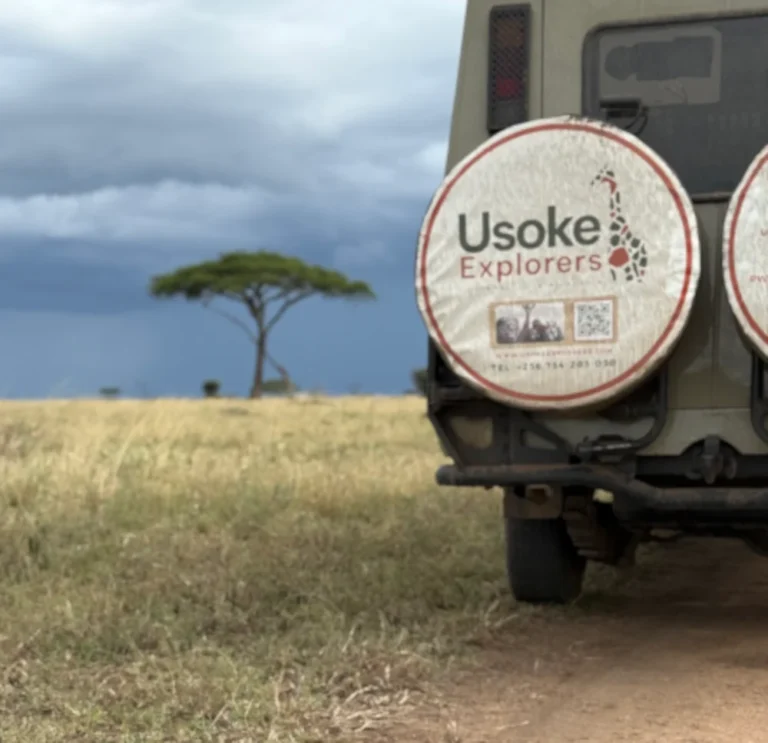
Usoke Explorers offers tailored safari packages that include boat cruises on the Kazinga Channel and Lake George, guided birdwatching and nature walks, community cultural tours, and wildlife safaris.
Book Your Adventure Today!
Visit: usokeexplorers.com
Email: usokeexplorer@gmail.com
Website: https://www.usokeexplorers.com/
Contact: Fill out our contact form to start your Lake George adventure.