Skip to content
Maasai Mara National Reserve: The Heartbeat of the African Savannah
“Where the plains stretch to infinity, and the wild tells its most ancient story.”
Overview
The Maasai Mara National Reserve is Kenya’s most celebrated wildlife destination and one of Africa’s finest safari ecosystems. Renowned for its sweeping savannah plains, dramatic predator action, and the world-famous Great Migration, the Mara offers an authentic East African safari experience shaped by wildlife, landscape, and Maasai culture. It has been officially recognized in the World Book of Records as the site of the “World’s greatest annual terrestrial wildlife migration” .

Where Is the Maasai Mara?
The Maasai Mara is located in southwestern Kenya, along the border with Tanzania. It forms the northern extension of Tanzania’s Serengeti National Park, creating one continuous ecosystem that allows wildlife to move freely between the two countries .
The reserve lies approximately 270–300 kilometers (about 5–6 hours by road) from Nairobi, though most visitors opt for a 45-minute scheduled flight from Wilson Airport to one of the Mara’s airstrips .
Covering roughly 1,510 square kilometers, the reserve is characterized by open grasslands, rolling hills, acacia woodlands, and the life-giving Mara River .
The Name and Its Meaning
The name “Maasai Mara” honors the Maasai people, the ancestral inhabitants of the area, who migrated to the region from the Nile Basin. Their description of the area when looked at from afar “Mara” means “spotted” in the Maa language is an apt description for the circles of trees, scrub, savannah, and cloud shadows that dot the landscape .
Landscape and Scenery
The Mara’s landscape is classic African savannah:
-
Endless golden grasslands
-
Scattered acacia trees
-
Riverine forests along the Mara and Talek Rivers
-
Seasonal marshes and rolling escarpments
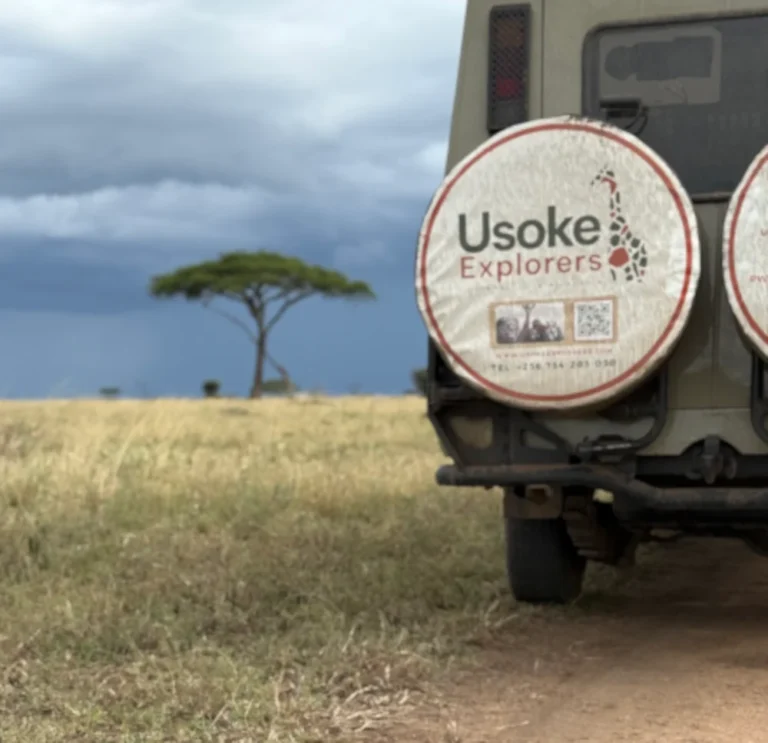
The terrain is relatively open, making wildlife viewing excellent year-round. The dramatic skies especially at sunrise and sunset create some of the most iconic safari photography settings in Africa. The western border is the Esoit (Siria) Escarpment of the Great Rift Valley, a fault line some 5,600 kilometers long .
Wildlife: What to Expect
The Maasai Mara is synonymous with extraordinary wildlife density. The reserve boasts one of the densest populations of big cats in Africa, including lions, cheetahs, and leopards .
The Big Five
Visitors commonly encounter:
-
Lions – Large prides and frequent hunting activity; often found near herds on open grasslands
-
Leopards – Especially around riverine forests; often resting in trees along the Mara River
-
Elephants – Seen across the Mara, particularly near river systems and marsh edges
-
Buffalo – Among the most dependable large-animal sightings, frequently found in large herds near water
-
Black Rhinos – Present in protected areas; their population is slowly recovering from historical poaching
The Great Migration
One of the reserve’s defining spectacles is the annual Great Migration. Each year, over 1.5 million wildebeest, 500,000 Thomson’s gazelles, and 200,000 zebras move between the Serengeti and the Maasai Mara in search of fresh grazing .
Between July and October, dramatic river crossings at the Mara River occur, where herds plunge into crocodile-infested waters while predators wait nearby . The reserve has been recognized as the “Seventh Wonder of the Natural World” for this extraordinary event .
Other Mammals
Beyond the Big Five and the migration, the Maasai Mara supports an impressive range of species:
-
Cheetahs – often seen hunting on open plains
-
Spotted hyenas – intelligent and regular predators
-
Giraffes – the distinctive Masai giraffe is common
-
Topi, hartebeest, and eland
-
Hippos and Nile crocodiles – in the Mara and Talek rivers
-
Jackals and servals
The plains between the Mara River and the Siria Escarpment are considered the best area for game viewing .
Birdlife
The Maasai Mara is also a significant birding destination, hosting over 470 recorded bird species, with almost 60 species being raptors .
Common sightings include:
-
Secretary birds and martial eagles
-
Lilac-breasted rollers – Kenya’s national bird
-
Ostriches and crowned cranes
-
Vultures and other raptors
During migration months, both resident and migratory birds are present, making it attractive for bird enthusiasts .
Safari Experiences
Game Drives
Morning and afternoon game drives are the primary way to explore the reserve. The open plains allow excellent visibility and frequent predator sightings. The best times are right after sunrise and a few hours before sunset when wildlife is most active .
Hot Air Balloon Safaris
Floating above the savannah at sunrise offers panoramic views of wildlife and landscape, followed by a bush breakfast. This is one of the Mara’s signature experiences .
Cultural Visits
The reserve is named after the Maasai people, who have lived alongside wildlife for generations. Cultural visits to Maasai villages offer insight into traditional pastoral life, customs, beadwork, and the warrior culture that continues to thrive in the region .
Night Skies
The Maasai Mara offers some of the most spectacular stargazing in Africa. With very little light pollution, the Milky Way is visible to the naked eye, accompanied by the distant sounds of lions and hyenas.
Conservation and Management
The Maasai Mara is administered by the Narok County government, with the Mara Conservancy managing the western section (Mara Triangle) . The reserve is part of the Greater Mara Ecosystem, which includes group ranches and conservancies where wildlife roams freely across unfenced borders. Entry fees (as of 2025) are approximately $200 USD per adult per day for non-residents during peak season .
Climate and Best Time to Visit
The Maasai Mara enjoys a mild climate due to its altitude (about 1,500–2,100 metres above sea level).
| Season | Months | Experience |
|---|---|---|
| Peak Season | July–October | The Great Migration, river crossings, peak wildlife density; busiest and most expensive |
| Short Dry Season | December–February | Fewer crowds, clear skies, excellent predator sightings |
| Green Season | April–June | Lush landscapes, low tourist traffic, lower rates, exceptional birdlife |
Getting There
Most visitors arrive via Jomo Kenyatta International Airport (NBO) in Nairobi.
By Air: Scheduled domestic flights (45 minutes) from Wilson Airport to various airstrips near the reserve, including Ol Kiombo, Keekorok, and Mara Serena .
By Road: A 5–6 hour scenic drive offers a journey through rural Kenya, though roads can be rough, so a 4×4 vehicle with an experienced driver is recommended .
Visa Requirements: Most nationalities require a Kenyan Electronic Travel Authorization (eTA), applied for online before departure .
Why the Maasai Mara Is Special
What sets the Maasai Mara apart is not just the abundance of wildlife, but the intensity of the experience:
-
High predator density: Unmatched in Africa
-
Open landscapes: Exceptional visibility for game viewing
-
Cultural richness: The living Maasai tradition
-
The Mara River: Dramatic crossings that define the Great Migration
-
Unfenced wilderness: A truly authentic safari experience
-
Official recognition: Recognized by the World Book of Records for the greatest annual terrestrial wildlife migration
It remains one of Africa’s most reliable and rewarding safari destinations, offering both classic game viewing and iconic natural events in a relatively compact and accessible area.
Book Your Safari
Ready to experience the magic of the Maasai Mara? Contact Usoke Explorers today to plan your safari adventure. Whether you’re chasing the Great Migration, seeking the Big Five, or simply longing to witness Africa’s wild heart, we’ll help you create memories that last a lifetime.