Skip to content
The Chimpanzee Civil War in Kibale National Park: Conflict and Survival
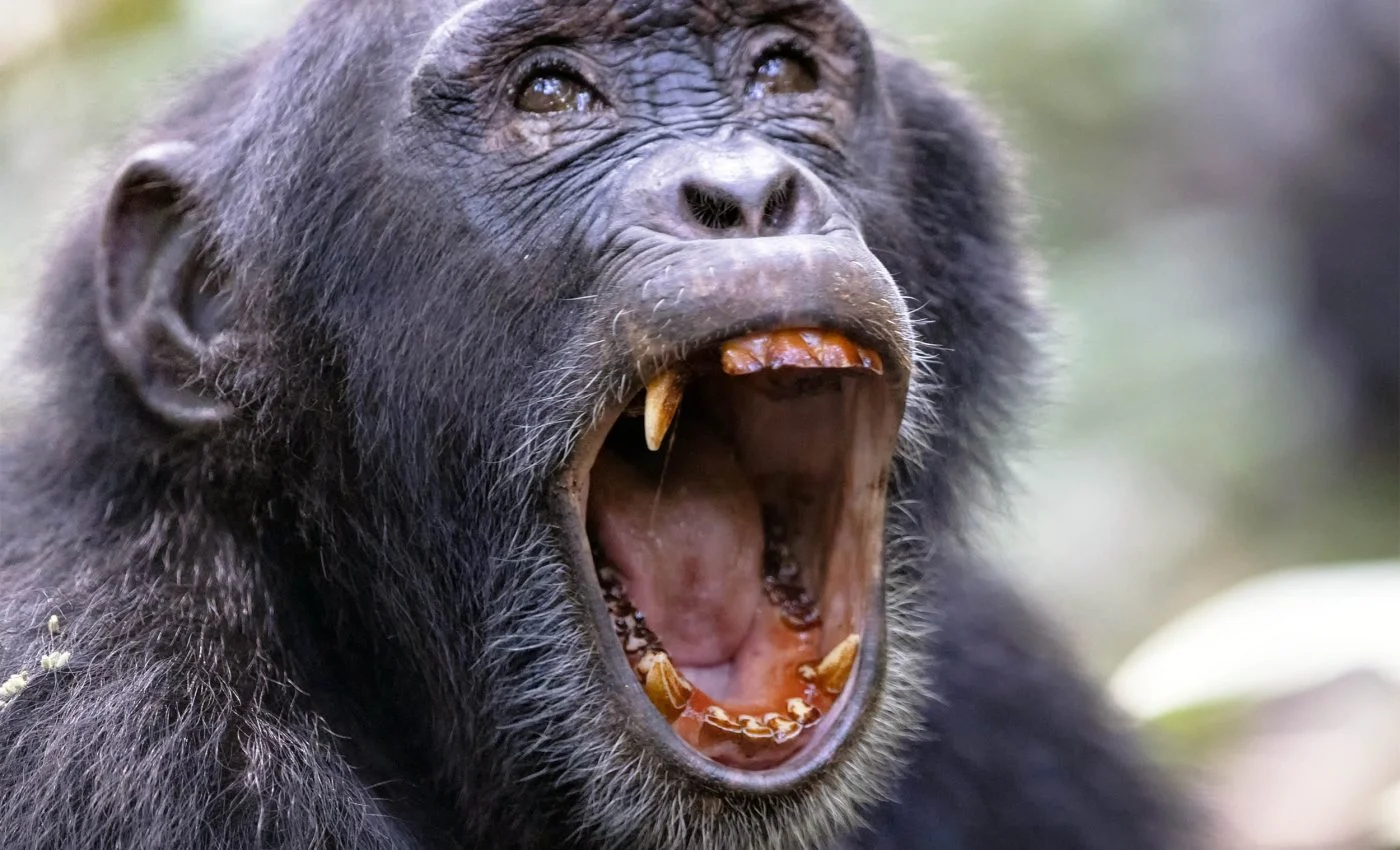
In the thick, breathing rainforest of Kibale National western Uganda, there are times when the forest is quiet. Not the calm, quiet that visitors expect, but a tense, watchful silence. In those moments, you start to get something important: this forest is more than just pretty. There are a lot of stories in it, some of which are complicated, emotional, and even scary.
Kibale has been known as the primate capital of the world for a long time. Tourists come with excitement, hoping to see chimpanzees swinging through the trees, calling to each other, grooming in small groups, or playfully chasing each other across the forest floor.
And most of the time, that’s what they see.
But there is a deeper truth behind those moments that scientists have been quietly recording for decades. A reality that shows that chimpanzees don’t just live in peace; they also deal with stress, change, and sometimes even conflict. This is the story of all the chimpanzee groups in Kibale, including their past, their relationships, the conflict that shocked the world, and what it all means for the future.
A Forest Full of Life and Communities
To really get what’s going on in Kibale, you have to stop thinking that the chimpanzees there all live together as one big family. No, they don’t. Kibale is not one big chimpanzee community; instead, it is made up of several smaller ones, each with its own territory, identity, and way of life.
Some of the most famous are:
- Kanyawara is the group that most visitors follow.
- Ngogo, which was the biggest ever recorded
- Sebitoli is smaller and quieter, but just as interesting.
- A few lesser-known groups live deep in the woods
Each of these groups works like its own little world.
There are friendships, rivalries, alliances, and politics inside of them. Yes, politics. Male chimpanzees form groups, fight for dominance, and sometimes spend years building relationships that decide who is the highest-ranking member of the group. Females take care of their young while moving through this complicated social space. Young chimpanzees learn by watching, playing, and slowly figuring out how their society works.
It’s not easy. It is not random. It is a network of people who know each other.

Earlier Way of Life
From a scientific point of view, life in Kibale seemed stable for a long time. Every day, chimpanzees groomed each other. It wasn’t just about cleanliness; it was also about trust. Grooming brings people together. It makes things less tense. It keeps the group together. They also went hunting together. When a group of men worked together to catch monkeys, it showed that they could work together and coordinate. Sometimes people shared food, which helped keep alliances strong. When there were conflicts, they didn’t last long. Yes, loud and dramatic, but only for a short time. Afterward, chimpanzees often made up.
Researchers spent decades watching, learning, and writing about this. And for a while, it seemed like they knew how chimpanzee groups worked. Until things started to change.
The Change That No One Saw Coming
The change didn’t happen all at once. It came without a sound. Researchers started to notice little things around 2015. Things you might miss if you weren’t paying close attention.
- Some chimpanzees started to stay away from others.
- Groups that usually get together didn’t this time.
- Things that used to end in grooming now end in stress.
One group would sometimes suddenly run away, and another would follow, not to play but to show clear aggression. It didn’t seem like much at first. Chimpanzees have feelings. They fight. They get into fights. But this was different, because it never stopped. Weeks went by. Then there were months. Some people started to drift apart. And instead of coming back together, the gap got bigger.
When Two Communities Became One
Something that researchers don’t see very often happened in 2018.One group of chimpanzees had completely broken up into two Not for a short time. Not loosely. Totally. The two groups stopped talking to each other completely:
- No grooming
- No eating together
- No moving together
- No mixing of genes
It looked like there was a line through the woods. And once that line was drawn, everything changed.
The Violence That Followed
What happened next shocked the whole world. This was more than just separation. It was a fight. Groups of chimpanzees, mostly males, started to move through the forest without making any noise. With care. On purpose. They weren’t just walking around. They were looking, when they found a member of the other group, especially one who was alone, the attack was quick and too much for them to handle. There was no warning.
Researchers have kept track of the following over the years:
- More than 24 confirmed deaths
- A lot of them were babies
- A few adult men
- Others who just vanished
And this was the most important thing that stood out: These attacks were planned. Chimpanzees kept an eye on the borders of their territory. They worked together. They went after weakness. It wasn’t a mess. It was a plan.
The Most Difficult Thing to Accept
But maybe the hardest part of this story isn’t the violence itself. It’s who it happened to. These chimps had been friends since they were young.
They had:
- Took care of each other
- Ate together
- Looked out for each other
They were friends. But after the breakup, that history didn’t matter anymore. They turned into strangers. Then they became rivals. Then foes.
What Happened?
It’s not easy to say. That’s what makes this story so real. But scientists say that a few things probably came together:
- Some important people died, like chimpanzees that kept social networks going.
- Leadership changed, which made things tense between men who were trying to be the best.
- A disease outbreak killed a lot of people, which made the community weaker.
- The group had grown very big, which made it harder to stay close to each other.
- And at the bottom of it all was competition—for food, land, and mates.
None of these things caused the fight. But together? They put pressure on. And in the end, that pressure broke the system.
This Is Bigger Than Just One Group
You need to be clear about one thing, not every chimp in Kibale is fighting. Most communities go about their daily lives, which include feeding, grooming, and raising young. But this fight showed something deeper: Chimpanzee groups are not always the same. They are able to change. And sometimes, they can break.
Scientists now see chimpanzees as more than just animals. They see them as complex social beings living in systems that can work or not work.
What We’re Learning
This study has become one of the most important ones for scientists who want to understand behavior. Because it makes people think about things that make them uncomfortable.
What does it say about us that chimpanzees can fight and divide like this without politics, religion, or borders?
There may not always be big reasons for conflict. It might start with small changes sometimes:
- Relationships that have ended
- Changing identities
- Getting farther apart
After that, everything else will happen.
What the current situation is like
The forest is still alive today.
In the morning, chimpanzees still call out. Mothers still carry their babies. People still move through the trees in groups to find food. People still come to see it.
There are still guides who lead hikes through the woods. Life goes on.
But now, I understand it better. That there is complexity under the beauty.
Going to Kibale Today
If you’re wondering if this will affect tourism, the answer is simple: No. Chimpanzee trekking in Kibale is still:
- Safe
- Well-planned
- One of the best things to do in Africa
People follow habituated chimpanzees, especially in Kanyawara. These groups are used to people being around and are watched closely. Knowing this story makes the experience even better. You don’t just see animals when you see chimpanzees now. You’re looking at a society.
Why This Story Is Important
There aren’t many chimpanzees left. And stories like this remind us that protecting land and numbers isn’t the only thing that matters. It’s about keeping relationships safe. Even a strong population can become weak without stable social systems. Kibale is still one of the best places in Africa to see chimpanzees, but it also reminds us of how important it is to protect what we have
FAQs About Chimpanzees in Kibale National Park
1. What is the chimpanzee conflict in Kibale National Park?
The chimpanzee conflict is a rare case of a community that was once united splitting into rival groups that later worked together to attack.
2. Are all chimpanzee groups taking part?
No. Most communities stay the same. The fight mostly hurt one group.
3. Why did they fight?
Changes in leadership, deaths, disease, competition, and the size of the group all played a role.
4. Is it safe to go trekking?
Yes. It is safe and well run.
5. How many chimpanzees live in Kibale?
There are about 1,500 chimpanzees in the park.
Last Thoughts:
A Forest That Shows Who We Are, this story is very human in a lot of ways. Not because chimpanzees are like us. But because the patterns seem familiar. A strong group of people. Changes that happen slowly. Distance is getting bigger. Split
Disagreement.
And the realization that it didn’t have to be that way. Kibale is more than just a place to go. It is a story that lives. And if you listen closely, over the sounds of the forest and the excitement of trekking, you might hear something else.
A note to remember.
That relationships are important even in the wild. And when they break, everything is different.